
필립보와 안드레아 증후군
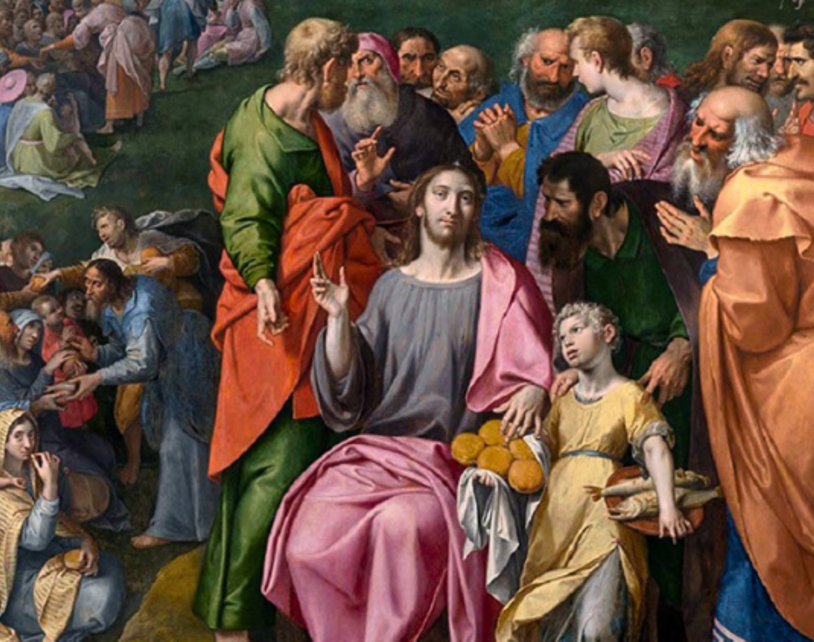
복음에서 요한복음 6,1-15은 오천 명을 먹이신 기적의 이야기를 전해줍니다. 저는 이 대목을 묵상하거나 해설해야 할 때 다음 몇 가지 점에 주목하곤 합니다.
복음의 장면은 “많은 군중”이 예수님을 따랐고 예수님께 다가갈 때 벌어집니다. 예수님께서는 그 상황에서 제자들에게 배고픈 “많은 군중”을 먹이라는 책임을 부과하십니다.
저로서 주목하고 싶은 내용은 필립보의 “저마다 조금씩이라도 받아먹게 하자면 이백 데나리온어치 빵으로도 충분하지 않겠습니다.”(요한 6,7)라는 대답, 그리고 이어서 안드레아가 “여기 보리 빵 다섯 개와 물고기 두 마리를 가진 아이가 있습니다만, 저렇게 많은 사람에게 이것이 무슨 소용이 있겠습니까?”(요한 6,9) 하고 예수님께 여쭙는 대답입니다.
이러한 필립보와 안드레아의 두 대답을 통해 저는 여러분과 함께 우리 그리스도인이 누군가와 신앙의 기쁨을 나누려고 할 때, 자신도 모르는 사이에 필립보 증후군이나 안드레아 증후군에 감염될 수 있다는 점을 나누고 싶습니다. 어쩌면 두 증후군 모두에 동시에 빠질 지도 모릅니다.
교회, 수도회, 살레시오 가족의 삶 안에서 도전은 늘 존재합니다. 우리의 소명은 서로 안락함만을 추구하거나 서로 방해하거나 방해받지 않는 사람들의 모임을 추구하고자 하는 것은 아닙니다. 우리의 삶은 미리 정해진 확실성으로만 구성되어 있지는 않습니다.
그리스도의 몸에서 지체가 된다는 것은 세상의 현실에서 벗어나는 것이 아니라, 그 현실 속으로 더 깊이 들어가도록 요청받는 일입니다. 우리는 예수님의 눈으로, 그리고 무엇보다도 그분의 사랑에서 비롯된 눈으로 현실을 바라보아야만 합니다. 이는 곧 예수님께서 가르치시고 보여주신 것처럼 타인을 위해 사는 삶을 살아야만 한다는 것입니다.
필립보 증후군
필립보 증후군은 교묘하고 위험합니다. 필립보의 대답에서 볼 때 그의 분석은 옳았습니다. 예수님의 요청에 따른 그의 반응이 그리 틀린 것은 아니었습니다. 인간적으로는 매우 합리적인 판단이었습니다. 그는 인간적인 눈으로 현실을 바라보았고, 상황을 고려하여 예수님께서 말씀하신 내용을 수행하는 것이 불가능하다고 판단하였습니다. 이렇게 그저 “합리적”인 태도만을 취하게 되면, 굶주린 자들이 더는 나에게 도움을 요청할 필요가 없게 되고, 문제가 더는 내 문제가 아니라 그들의 문제로 남아버리게 됩니다. 우리의 일상에서 자주 마주치는 상황을 예로 든다면 이런 것입니다: 가난한 사람, 병든 사람은 스스로 문제를 해결해야 하고, 나는 그 문제에 관여할 필요도, 해결책을 제시할 이유가 없습니다. 이것이 바로 필립보 증후군입니다. 그는 예수님의 제자이면서도 현실을 보는 방식이 여전히 인간적인 관점에 갇혀 있으며, 스승님의 사고방식과는 거리가 멉니다.
안드레아 증후군
다음은 안드레아 증후군입니다. 안드레아 증후군이 필립보 증후군보다 더 심각하다고는 말할 수 없지만, 그에 못지않게 비극적일 수는 있습니다. 이 역시 교묘하고 냉소적인 태도입니다. 일말의 가능성을 보면서도 더는 나아가지 않습니다. 희미하지만 희망의 빛을 보면서도 인간적으로 판단해서 현실성이 없다고 생각하여 스스로 주저앉아 희망을 꺾어버립니다. 그리고 결국 그 희망과 그 희망을 제공한 사람까지 깎아내리게 됩니다. 여기서 폄하를 당하는 ‘운이 없는 사람’은 자신의 것을 내놓고 나누려고 했던 한 순수한 소년이었습니다!
이 두 가지 증후군은 오늘날에도 교회 안에, 그리고 사목자들과 교육자들 사이에도 여전히 존재합니다. 작은 희망을 짓밟는 것이 하느님의 놀라운 가능성에 여지를 내어드리기보다 더 쉽기 때문입니다. 자칫하면 우리는 고정된 해석에 안주하게 되고, 복음적인 해석은 점점 설 자리를 잃게 됩니다. 복음의 신선한 바람이 들어올 수 없게 만드는 것입니다.
인간적이고 수평적인 사고방식이 도전을 받을 때, 사람들은 비웃음으로 이를 방어하려 합니다. 복음의 새로움을 받아들이고자 하는 이들은 조롱받고 공격당하고 무시당합니다. 그러나 아이러니하게도 이러한 조롱은 오히려 ‘예언적인 길’을 가고 있다는 표지가 됩니다. 물이 움직이고 있다는 뜻입니다.
두 증후군을 넘어서시는 예수님
예수님께서는 사람들이 별 볼 일 없다고 느낀 보리 빵과 물고기 두 마리를 ‘받아들이심’으로써 이 두 증후군을 물리치십니다. 예수님께서는 우리에게도 이 신앙의 공간 안에서 살도록 초대하십니다. 우리가 대중 앞에 설 때, 자기중심적인 해석에만 머물러서는 안 됩니다. 예수님을 따르는 것은 인간적인 논리를 넘어서는 일입니다. 그분은 우리에게 해답이 있기를 원하지 않으십니다. 다만 우리 자신과 우리가 가진 것을 온전히 내어놓기만을 바라십니다.
우리가 자기중심적인 사고와 우리가 가졌다고 생각하는 것을 그저 지키려고 하는 소유욕에만 머물러 있다면, 그분의 초대 앞에서 우리는 멈추고 말 것입니다. 그러나 예수님의 말씀에 자신과 자신의 것을 관대하게 내어놓을 때 우리는 그분의 놀라운 섭리를 경험하게 됩니다. “그들이 모았더니, 사람들이 보리 빵 다섯 개를 먹고 남긴 조각으로 열두 광주리가 가득 찼다.”(요한 6,13) 하지 않았습니까? 두 증후군을 넘어서서 한 소년의 작은 나눔이 놀라운 결실을 맺었습니다.
교황 베네딕토 16세께서는 이 소년의 행동에 대해서 다음과 같이 말씀하십니다: 「오천 명을 먹이신 기적의 장면에서 한 소년이 등장합니다. 그는 많은 사람을 먹이는 일이 어렵다는 상황 속에서 자신이 가진 조그마한 것, 다섯 개의 빵과 두 마리 물고기를 기꺼이 내어놓고 나누고자 합니다. 이 기적은 무에서 이루어진 것이 아니라, 단순한 소년의 작은 나눔에서 비롯됩니다. 예수님은 우리에게 없는 것을 요구하지 않으십니다. 다만, 아주 조금일지라도 우리가 가진 것을 내어놓는다면, 기적은 항상 새롭게 일어날 수 있습니다. 하느님께서는 우리의 작은 사랑의 제스처를 배로 늘리시며, 우리를 그분의 선물에 동참하게 하십니다.(삼종기도 훈화, 2012년 7월 29일)」
우리가 맞닥뜨린 사목적 도전들, 젊은이들이 갈망하는 영적 굶주림 앞에서, 우리는 두려워하지 말아야 합니다. 우리의 방식이나 소유에 집착하지 말고, 우리가 가진 조금을 예수님께 내어놓읍시다. 그분의 말씀에 우리 자신을 맡기고, 그분의 말씀이 우리의 선택과 행동을 이끄는 유일한 기준이 되게 합시다.(살레시오회 총장 파비오 아타르드, 살레시오 가족지, 2025년 7/8월호)
***
The Message of the Rector Major Fr. Fabio Attard, SDB
In St. John’s Gospel (6:4-14), which recounts the multiplication of the loaves, there are some details that I dwell on at length whenever I meditate on or comment on this passage.
It all begins when, in front of the “huge,” hungry crowd, Jesus invites his disciples to take responsibility for feeding them.
The details I am referring to are, first, when Philip says that it’s impossible to take on this task because of the number of people present (v. 7). Then, second, Andrew points out: “There’s a boy here who has five barley loaves and two fish,” but then underestimates this possibility with a simple remark: “But what’s that among so many people?” (v. 9).
I simply wish to share with you, dear readers, how we Christians, who are called to share the joy of our faith, can sometimes, without realizing it, be infected by Philip’s syndrome or Andrew’s syndrome. Sometimes perhaps even by both!
In the life of the Church, as in the life of the Congregation and the Salesian Family, there are and always will be challenges. Ours isn’t a call to form a group of people who seek only to feel good, without disturbing or being disturbed. It’s not an experience made up of prefabricated certainties.
Being part of the Body of Christ shouldn’t distract us or remove us from the reality of the world as it is. On the contrary, it urges us to be fully involved in the events of human history. This means, first, to look at reality not only with human eyes, but also, and above all, with the eyes of Jesus. We’re invited to respond, guided by the love that finds its source in the Heart of Jesus; i.e., to live for others as Jesus teaches and shows us.
Philip’s Syndrome
Philip’s syndrome is subtle and, because of this, very dangerous. Philip’s analysis was right and correct. His response to Jesus’ invitation wasn’t wrong. His reasoning followed a very linear and flawless human logic. He looked at reality with his human eyes, with a rational mind and, having considered all things, saw it wasn’t feasible. When faced with this “reasonable” way of proceeding, the hungry man stops asking me for help; the problem is his, not mine. To be more precise in light of what we experience daily: the refugee could have stayed at home; he shouldn’t bother me. The poor and the sick can sort it all out by themselves; it isn’t up to me to be part of their problem, let alone find a solution for them. This is Philip’s syndrome. He’s a follower of Jesus, but his way of seeing and interpreting reality is still fixed, unchallenged, and light-years away from that of his Master.
Andrew’s syndrome
Next comes Andrew’s syndrome. I’m not saying it’s worse than Philip’s syndrome, but it’s not far off from being more tragic. It’s a subtle and cynical syndrome: it sees a possible opportunity, but it doesn’t go any further. There’s a tiny glimmer of hope, but humanly speaking, it’s not feasible. So we end up disqualifying both the gift and the giver. And the giver who is “unlucky” in this case is a young man who’s simply ready to share what he has!
These two syndromes are still with us, in the Church and also among us pastors and educators. It is easier to crush a small hope than to give space to God’s surprises, surprises that can generate hope, even if but a small one. It’s a constant temptation to allow ourselves to be conditioned by dominant clichés so as not to explore opportunities that challenge reductionist readings and interpretations. If we’re not careful, we become prophets and executors of our own ruin. By remaining closed in a human logic that’s “academically” refined and “intellectually” qualified, the space for a Gospel reading becomes increasingly limited and ends up vanishing.
When this human and horizontal logic is challenged, one of the marks it provokes in its defense is “ridicule.” Those who dare to challenge human logic because they let in the fresh air of the Gospel will be ridiculed, attacked, and mocked. When this is the case, oddly enough, we can say that we stand before a prophetic path. The waters are stirring.
Jesus and the two syndromes
Jesus overcomes the two syndromes by “taking” the loaves that are considered few and therefore irrelevant. Jesus opens the door to that prophetic and faith-filled space that we’re asked to inhabit. Standing before the crowd, we can’t be content with self-referential readings and interpretations. Following Jesus means going beyond human reasoning. We’re called to look at challenges through his eyes. When Jesus calls us, he doesn’t ask us for solutions but for the gift of our whole selves, with what we are and what we have. Yet the risk is that when faced with his call, we remain stuck in, and consequently slaves to, our own thinking, greedy for what we believe we possess.
Only in generosity based on abandonment to his Word can we reap the abundance of Jesus’ providential action. “So they gathered them up and filled twelve baskets with the pieces of the five barley loaves left over by those who had eaten” (v. 13). The boy’s small gift bears fruit in a surprising way only because the two syndromes didn’t have the last word.
Pope Benedict comments on the boy’s gesture as follows: “In the scene of the multiplication, the presence of a boy is also noted, who, faced with the difficulty of feeding so many people, shares what little he has: five loaves and two fish. The miracle doesn’t take place in a void, but from a modest sharing of what a simple boy had with him. Jesus doesn’t ask us for what we don’t have, but shows us that if each one of us offers what little he has, the miracle can always happen anew: God is able to multiply our small gesture of love and make us participants in his gift” (Angelus, July 29, 2012).
Faced with the pastoral challenges we have, faced with the thirst and hunger for spirituality that young people express, let’s try not to be afraid, not to remain attached to our things, to our ways of thinking. Let’s offer what little we have to him, let’s entrust ourselves to the Light of his Word, and may this and only this be the permanent criterion for our choices and the light that guides our actions.
(*기사 및 사진출처: https://bollettinosalesiano.it/rubriche/la-sindrome-di-filippo-e-quella-di-andrea/)

